

Blueberry Table of Contents
About Blueberries
Blueberry Facts
| Plant Zones | Zones 3–10 depending on variety |
| Soil Type | Acidic, well-drained, high organic matter |
| Soil pH | 4.5 – 5.5 (critical requirement) |
| Light | Full sun (6–8+ hours) |
| Water | Moderate; 1–2 inches per week |
| Chill Hours | 150-1,200 hours |
| Bearing Age | 2–3 years for light harvest; 5-7 years for full production; bear fruit for 20-40 years |
| Bloom Time | April – early May |
| Pollination | Self-fertile but cross-pollination increases yield and berry size |
| Harvest Time | June – August depending on variety |
| Average Yield | 5–10 pounds per bush |
| Lifespan | Up to 40 years |
| Uses | Fresh eating Preserves, Jams, Syrups Dehydrating Freezing Fermentation |
General Blueberry Information
Blueberries are perennial fruiting shrubs in the genus Vaccinium, valued for their sweet-tart berries, high antioxidant content, and long productive lifespan. They are native to North America and thrive in cool to temperate climates with acidic soils.
Blueberries grow as woody shrubs ranging from 1–12 feet tall depending on the species. They produce clusters of small bell-shaped flowers in spring that develop into blue to purple berries by early to mid-summer.
Blueberry Lifetime
Once established, blueberry bushes can remain productive for 20–40 years, making them an excellent long-term crop for homesteads.
Blueberry Chill Hours
Most blueberry varieties do require Chill Hours (number of hours below 45 degrees) in order to fruit. You can check your Chill Hours by using this handy Chill Hour Calculator: https://chill-hours.streamlit.app/
Low Chill: 150-800 Hours (Southern varieties)
Moderate Chill: 350-800 Hours (Rabbiteye varieties)
High Chill: 800-1,200 Hours (Northern varieties)
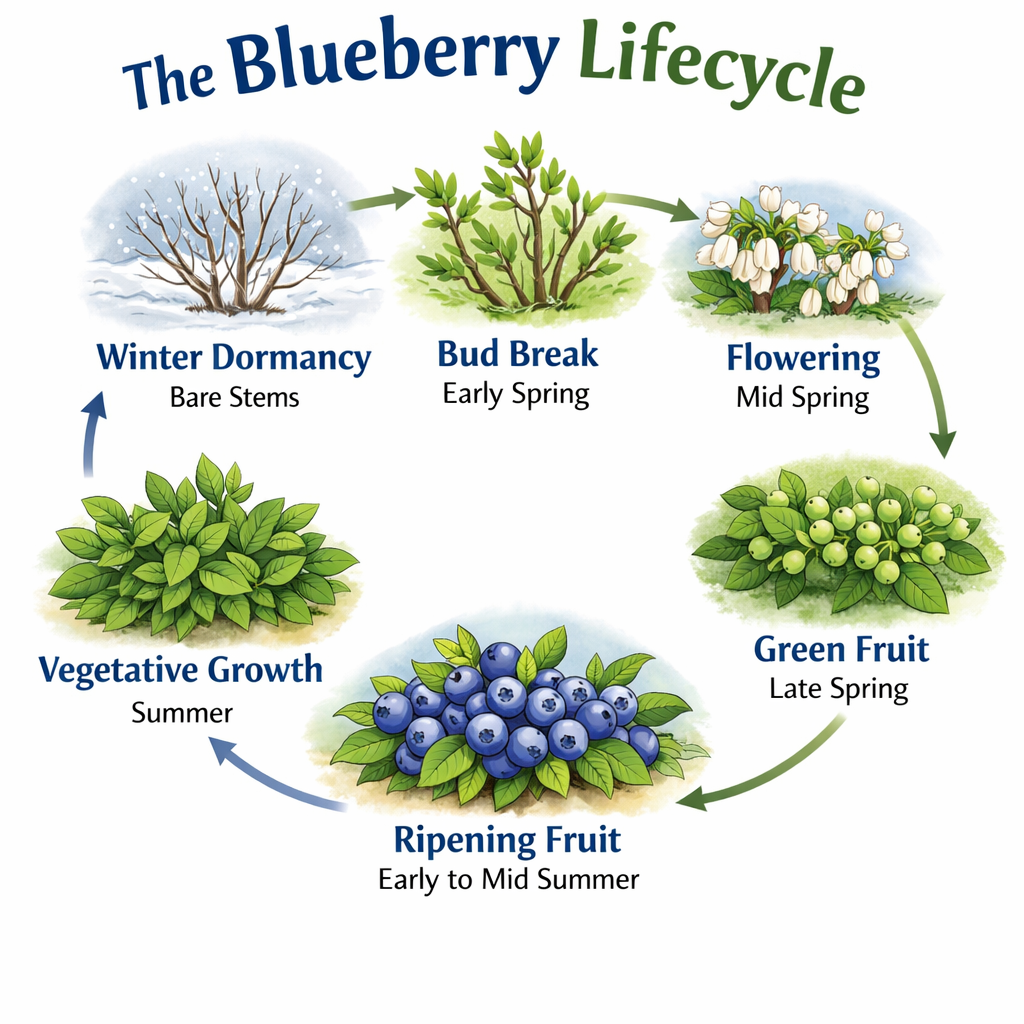
Blueberry Plant Lifecycle
Blueberries follow a predictable yearly cycle:
Dormancy (Winter)
Bushes lose leaves and store energy in roots and stems.
Bud Break (Early Spring)
Leaf and flower buds swell as temperatures warm.
Flowering (Mid Spring)
Clusters of white or pink bell-shaped flowers emerge.
Fruit Development (Late Spring)
Pollinated flowers develop into green berries.
Ripening (Early to Mid Summer)
Berries gradually turn blue and sweeten.
Vegetative Growth (Summer)
New canes and leaves grow.
Hardening Off (Fall)
Plants slow growth and prepare for winter dormancy.
Blueberry Plant Types
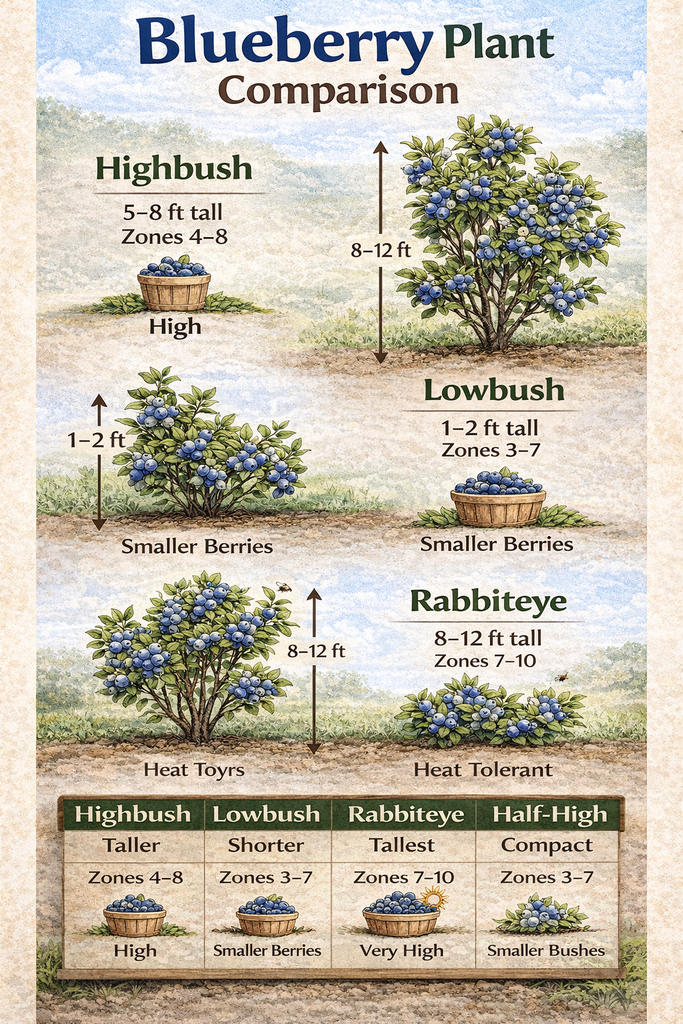
There are four major cultivated types.
Highbush Blueberries (Vaccinium corymbosum)
Most common commercial blueberry.
Height: 5–8 ft
Zones: 4–8
Yield: high
Best for: gardens and farms
Includes Northern Highbush, which works well in Zone 6a.
Lowbush Blueberries (Vaccinium angustifolium)
Height: 1–2 ft
Zones: 3–7
Often wild harvested
Smaller berries but intense flavor.
Rabbiteye Blueberries (Vaccinium virgatum)
Height: 8–12 ft
Zones: 7–10
More heat tolerant.
Usually not ideal for colder climates.
Half-High Blueberries
Hybrid between highbush and lowbush.
Height: 3–4 ft
Zones: 3–7
Cold hardy and compact.
Great for northern homesteads.
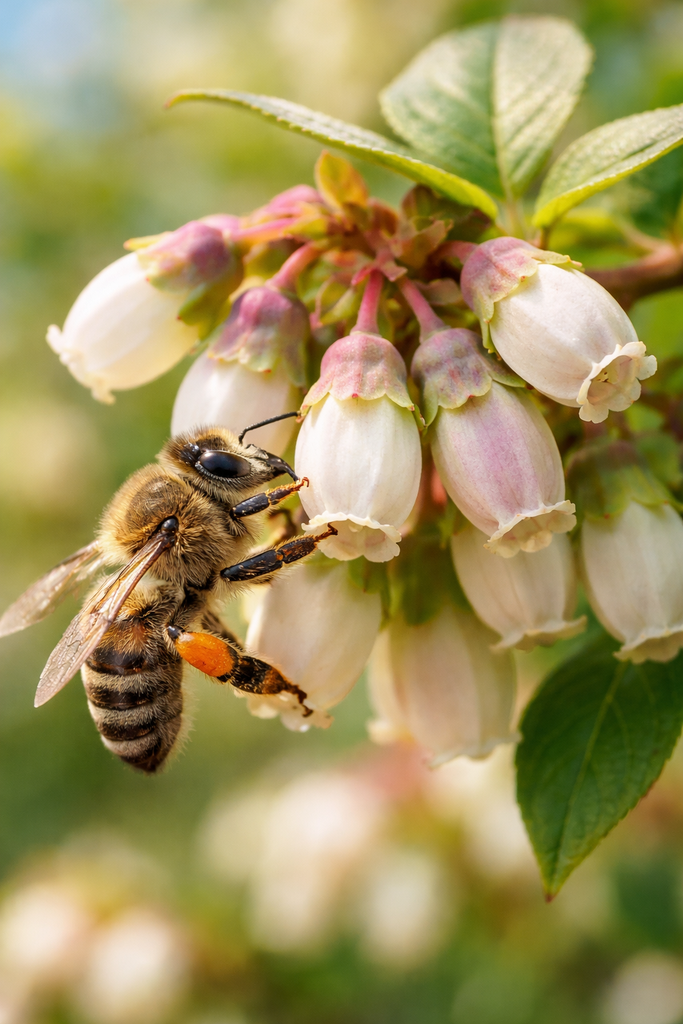
Blueberry Flowers & Pollination
Blueberry flowers are:
- Bell shaped
- White or pale pink
- Hanging clusters
They are primarily pollinated by:
- Bumblebees
- Native solitary bees
- Honeybees
Blueberries benefit from cross-pollination between varieties because it:
- increases berry size
- increases yields
- improves fruit quality
Plant 2–3 different varieties nearby for best production.
Blueberry Fruit Characteristics
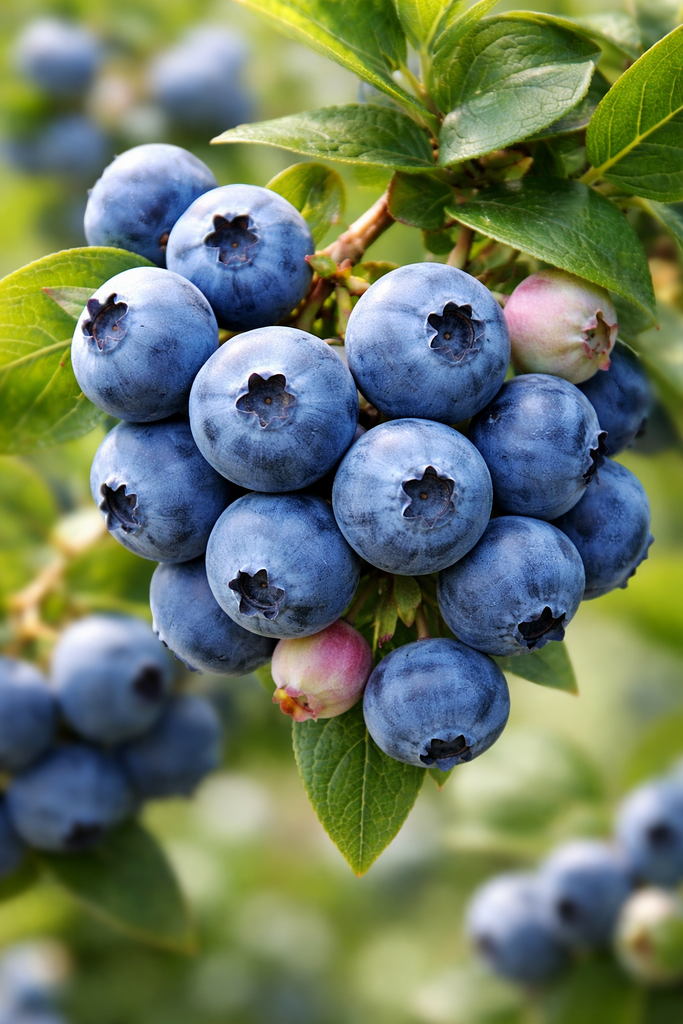
Blueberry Physical Appearance
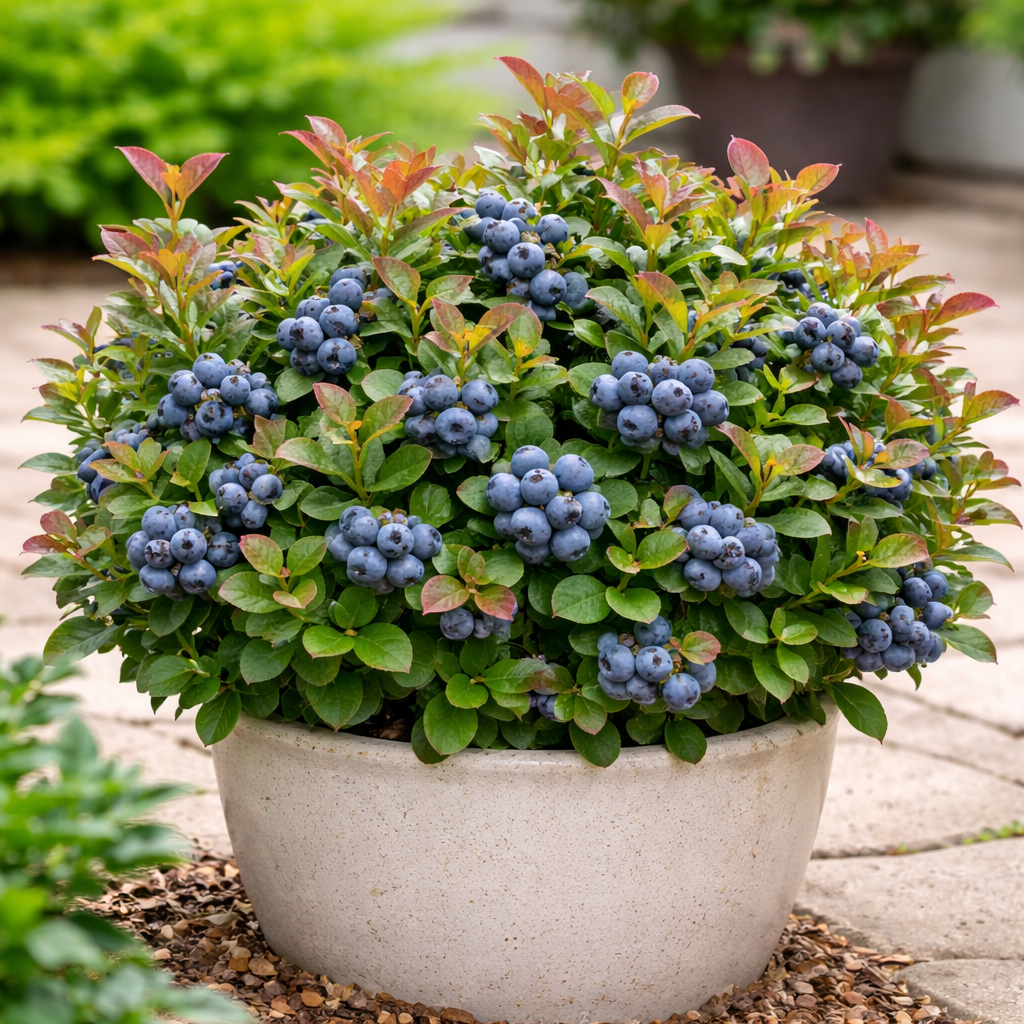
- Round berries
- ¼ to ½ inch diameter
- Blue to deep purple
- Covered in a waxy coating called bloom
Blueberry Flavor Profile
- Sweet
- Slightly tart
- Aromatic
Good berries detach easily when ripe.
They ripen in stages, so harvesting happens over several weeks.
Blueberry Nutrition
Blueberries are one of the most nutrient-dense fruits.
Per 1 cup (148 g approx):
Calories: ~84
Fiber: ~4 g
Vitamin C: ~16% daily value
Vitamin K: ~24% daily value
Manganese: ~22% daily value
Key compounds:
- Anthocyanins (powerful antioxidants)
- Flavonoids
- Polyphenols
Health benefits often linked to:
- brain health
- heart health
- anti-inflammatory effects
- blood sugar regulation
Blueberry Growing Environment
Blueberries thrive in environments with:
Cool winters (for chill hours)
Mild summers
Acidic soils
Consistent moisture
Good drainage
Ideal conditions:
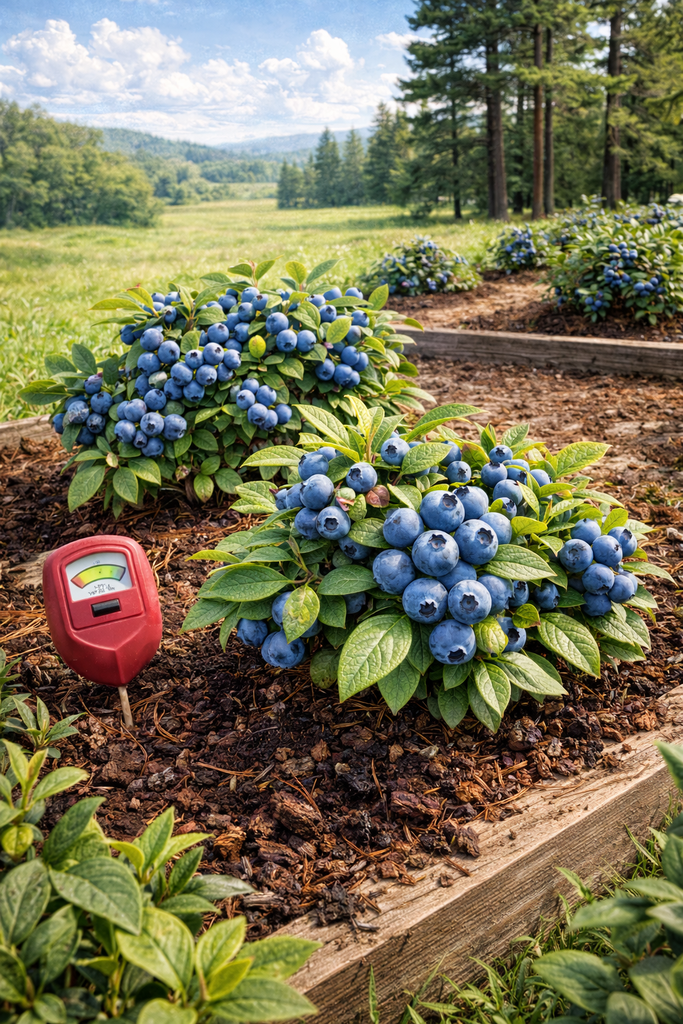
- Soil rich in peat, pine bark, compost
- Mulch with pine needles or wood chips
- Protection from drying winds
- Slightly elevated beds
For Northern New Mexico, the biggest challenge is alkaline soil. Many growers solve this by:
- Raised beds
- Heavy peat moss
- Elemental sulfur
- Pine bark mulch
Wild vs Cultivated Blueberries
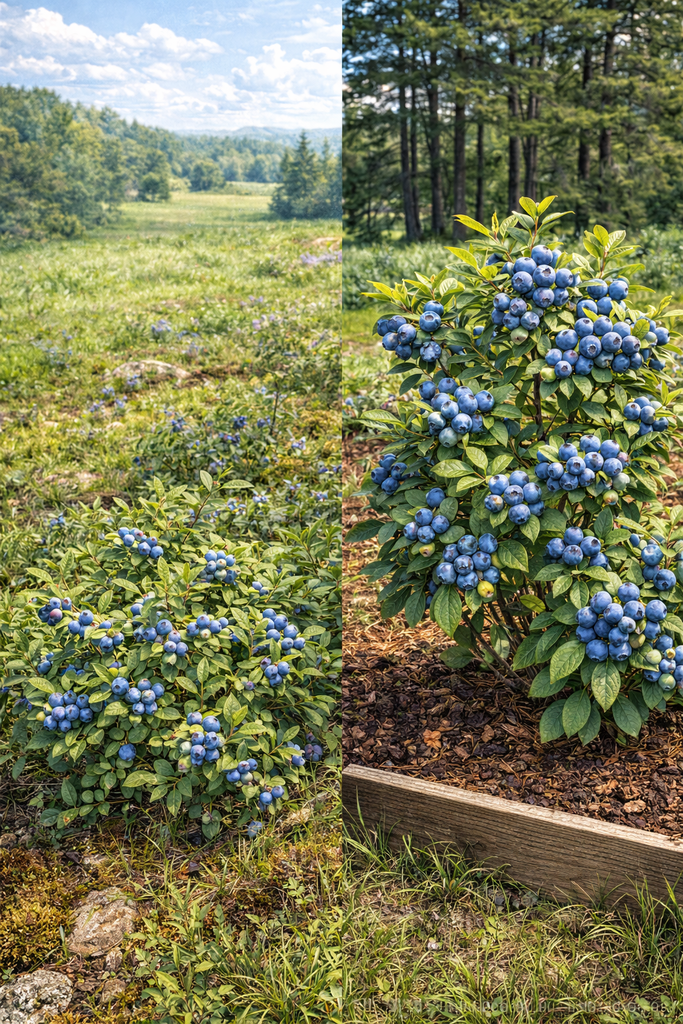
Wild blueberries:
- smaller berries
- intense flavor
- lower yield per plant
- extremely cold hardy
Cultivated blueberries:
- larger berries
- higher yields
- easier harvest
- bred for flavor and storage
Wild blueberries are common in:
- Maine
- Canada
- northern forests
Most backyard growers plant highbush cultivars.
Blueberry Ecological Value
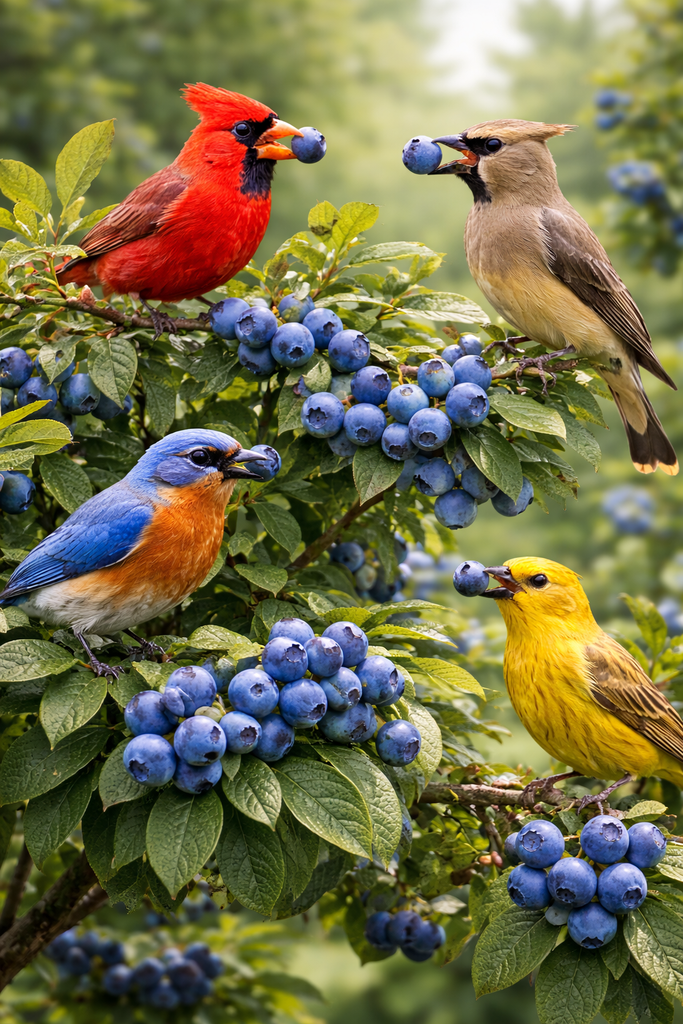
Blueberries provide important ecological benefits.
Wildlife value:
- berries feed birds
- bears, foxes, and deer eat fruit
- small mammals eat fallen berries
Pollinator support:
- early nectar source for bees
Habitat value:
- dense shrubs provide shelter for birds
Because they are native plants, blueberries support local ecosystems better than many fruit crops.
Blueberry Monthly Schedule
| January | Plants dormant Plan varieties and planting locations Order bare-root plants |
| February | Soil testing Begin acidifying soil if needed Prepare beds |
| March | Plant bare-root blueberries Add mulch (pine bark, pine needles) |
| April | Bud break begins Monitor moisture Apply organic fertilizer (acidic) |
| May | Bloom period Encourage pollinators Protect flowers from late frost |
| June | Fruit forming Net bushes if birds become a problem Maintain watering |
| July | Main harvest season Pick berries every 2–3 days Continue watering |
| August | Late harvest varieties finish Light pruning of damaged wood |
| September | Plants storing energy Maintain mulch Stop fertilizing |
| October | Leaf color change and drop Add fresh mulch |
| November | Dormancy begins Protect roots with thick mulch |
| December | Fully dormant Minimal care required |
Blueberry Varieties
These are the varieties that I am growing on my ranch at 8,500ft elevation and Plant Zone 6a. Click on the name to view detailed information for that specific variety and any growing notes from my personal experiences with that variety.
- Bluecrop
- Blueray
- Brigitta
- Chandler
- Duke
- Earliblue
- Elliott
- Emerald
- Hardyblue
- Jelly Bean
- Legacy
- Patriot
- Peach Sorbet
- Pink Icing
- Pink Lemonade
- Reka
- Rubel
- Spartan
- Top Hat
Where to Buy Blueberries

Willis Orchards
https://www.willisorchards.com
Fantastic quality plants at good prices. I have always had really good success rates with Willis Orchard plants and highly recommend them. Order early to get the varieties you want.

Mehrabyan Nursery
https://www.mehrabyannursery.com/
Fantastic quality plants at excellent prices. I love the large selection of plant varieties that I can’t find anywhere else and really good pricing on trees. One of my favorite places to buy plants.

Fam Plants
Great place to get small plants for a reasonable price. Most plants come in a 4-pack. Plants are usually about 6″ in size. Sometimes I prefer to get smaller plants so they’re not root bound and I can start them out right.

Raintree Nursery
Good selection of varieties that you may not be able to find elsewhere. I really like this nursey and order from them often.

Stark Bros.
Great quality plants with a 1-year guarantee. Granted, you will pay more for a smaller plant. I typically have a 95%+ success rate with all my Stark Bros plants.

Arbor Day Foundation
Arbor Day Foundation is a new plant source for me as of 2026 so I have no commentary on plant quality yet (will update once my plants have arrived and grown out), but they do have good pricing.

Hartmann’s Plant Company
https://hartmannsplantcompany.com/
Great place to buy bulk plants! Great pricing with lots of varieties to choose from.

Krieger’s Nursery
Both Retail and Wholesale quantities available of a large selection of plants.