
Rubus hybrid
Blackberry Baby Cakes
| Size | 3-4ft height + spread |
| Plant Zones | 4-8 |
| Soil Type | Well drained |
| Soil pH | 6.5 – 7.5 |
| Light | Full Sun (6-8hrs) |
| Water | Moderate |
| Bearing Age | 2-3 Years Old |
| Chill Hours | 400 Hours |
| Bloom Time | May |
| Pollination | Self-pollinating |
| Harvest Time | July, September |
| Average Yield | 1-2 lbs per Mature Plant |
| Uses | Fresh Eating Frozen Jams, Jellies, Syrups Baking |
About
Baby Cakes® Blackberry is a compact, thornless dwarf blackberry developed by the University of Arkansas System Division of Agriculture and sold through the Bushel and Berry line. It was bred specifically for small gardens, patios, and containers, which makes it ideal for people growing food in limited space.
Unlike traditional sprawling blackberry plants, Baby Cakes grows in a tight upright bush about 3–4 ft tall and wide. It produces large sweet berries on thornless canes, typically with two harvests per year in many climates.
For homesteaders, it’s a good plant because it’s:
- Suitable for containers or small garden beds
- Easy to maintain
- Thornless (much easier harvesting)
- Productive for its size

Edible & Nutritional Profile
Blackberries are among the most nutrient-dense berries available.
Edible Parts
- Berries (fresh or cooked)
Nutritional Highlights (per ~1 cup fresh)
- Calories: ~60
- Fiber: ~8 g
- Vitamin C: ~50% DV
- Vitamin K: ~35% DV
- Manganese: ~45% DV
Health Benefits
Blackberries are rich in:
- Anthocyanins – powerful antioxidants
- Ellagic acid – studied for anti-cancer properties
- Fiber – supports digestion and gut health
Benefits include:
- Anti-inflammatory effects
- Blood sugar regulation
- Heart health support
- Immune support
Planting
Best Location
Choose a spot with:
- Full sun (critical for fruit production)
- Well-drained soil
- Slightly acidic soil pH 5.5–6.5
Avoid low spots where cold air or water collects.
Container Planting
Baby Cakes performs extremely well in containers.
Container requirements:
- Minimum 16–20 inch pot
- At least 10–15 gallons
- Good drainage holes
Soil mix
- High-quality potting soil
- Add compost
- Optional: perlite for drainage
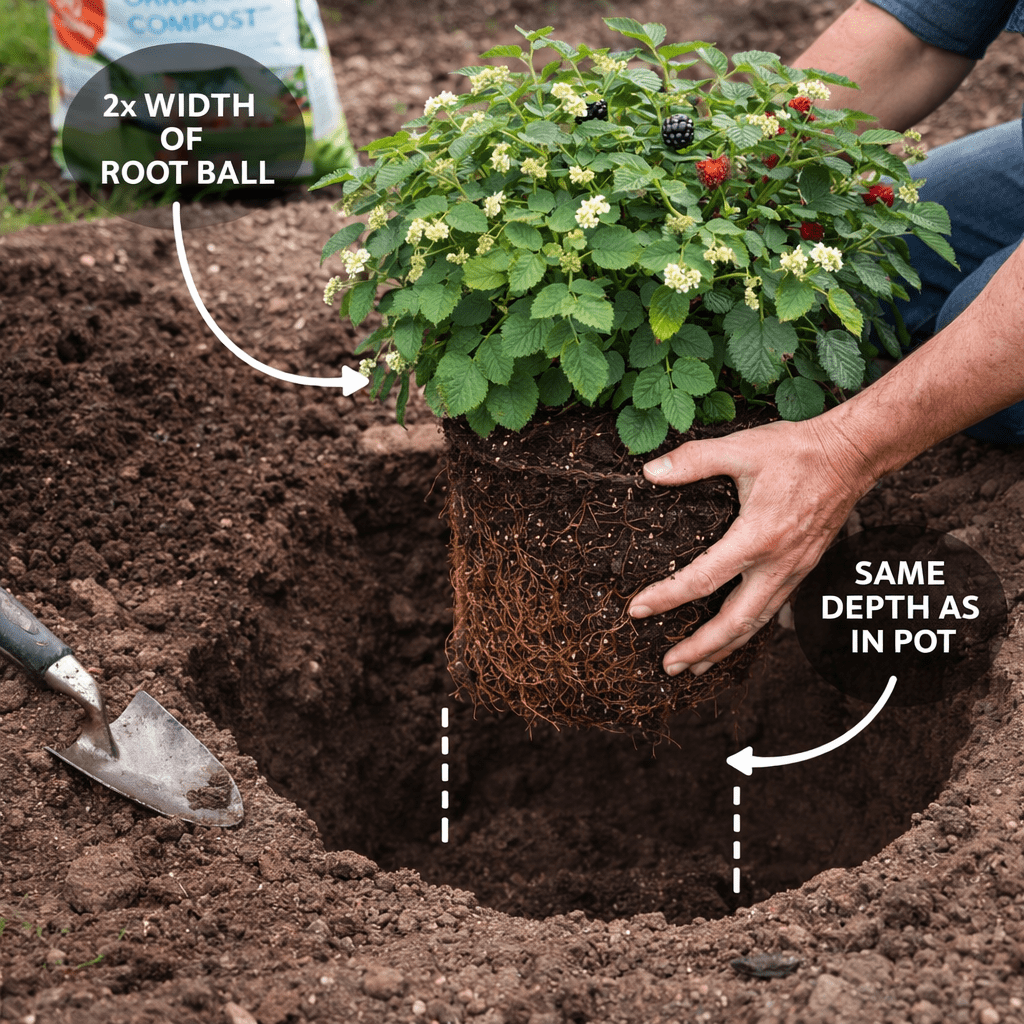
In-Ground Planting
- Dig hole twice as wide as root ball
- Depth equal to root ball height
- Mix compost into native soil
- Place plant at same depth it grew in the pot
- Backfill and water deeply
Spacing
- 3–4 ft apart
Caretaking
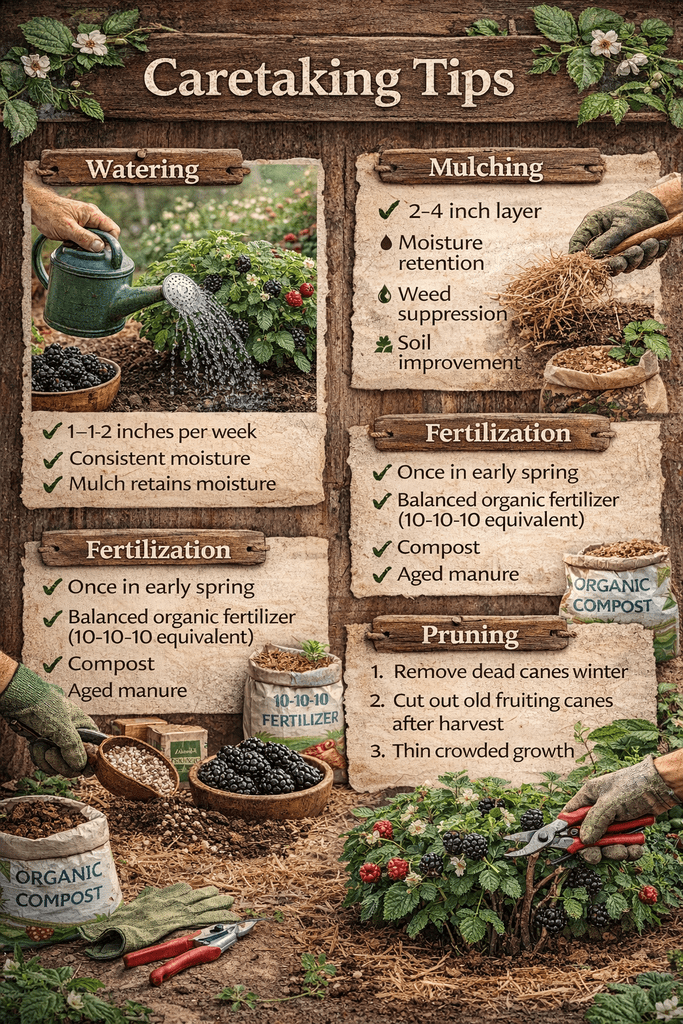
Blackberries need consistent moisture, especially during fruit production.
- 1–2 inches of water per week
Signs of drought stress: Small berries + Poor fruit development
Mulch
Apply 2–4 inches of mulch:
- Wood chips
- Straw
- Leaves
Fertilization
Feed plants once in early spring.
- Balanced organic fertilizer (10-10-10 equivalent)
- Compost
- Aged manure
- Avoid heavy nitrogen after mid-summer.
Pruning
- Baby Cakes requires minimal pruning.
- Thin crowded growth if necessary.
- Remove dead canes in late winter.
- After harvest, remove old fruiting canes.
Harvesting
When Fruit Ripens
Typical harvest window:
June–July (main crop)
Possible second crop in fall (September)
Harvest Signs
Ripe berries:
- Fully black
- Slightly soft
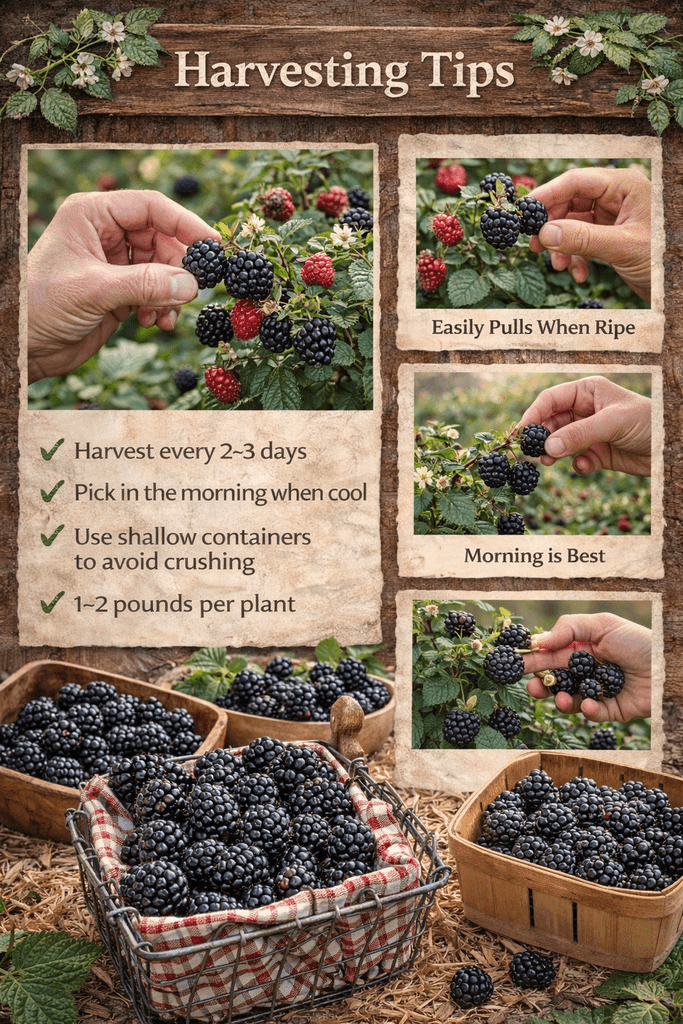
- Easily pull from plant
If berries resist picking, they are not ripe yet.
Harvest Tips
- Harvest every 2–3 days
- Pick in the morning when cool
- Use shallow containers to avoid crushing fruit
Expect 1–2 pounds per plant under good conditions
Uses & Storage
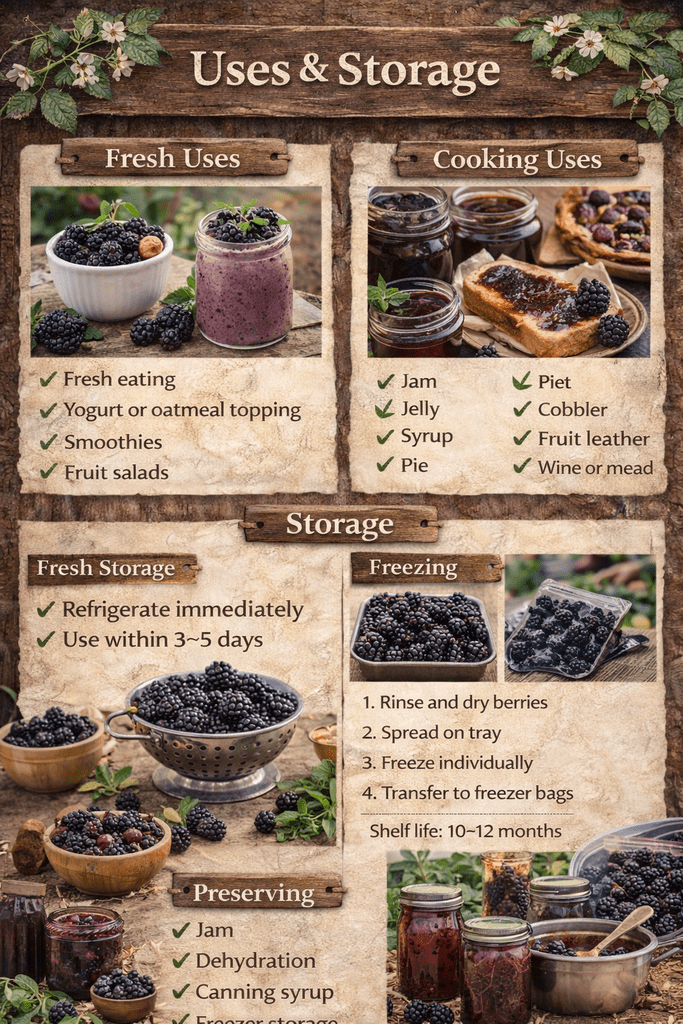
Fresh Uses
- Fresh eating
- Yogurt or oatmeal topping
- Smoothies
- Fruit salads
Cooking Uses
Blackberries are excellent for:
- Jam
- Jelly
- Syrup
- Pie
- Cobbler
- Fruit leather
- Wine or mead
Storage
Fresh Storage
- Refrigerate immediately
- Use within 3–5 days
Freezing
- Rinse and dry berries
- Spread on tray
- Freeze individually
- Transfer to freezer bags
Shelf life: 10–12 months
Preserving
- Jam
- Dehydration
- Canning syrup
- Freezer storage
| January | Plants dormant Check mulch protection Plan new plantings |
| February | Late winter pruning Remove dead or damaged canes |
| March | Apply compost or fertilizer Plant new bushes if soil workable |
| April | Rapid vegetative growth begins Maintain watering Refresh mulch |
| May | Flower buds form Monitor watering closely Watch for pests |
| June | First berries ripen Begin harvesting Net plants if birds are a problem |
| July | Peak harvest Continue picking every few days |
| August | Remove old fruiting canes Maintain watering in heat |
| September | Possible second light harvest Reduce fertilization |
| October | Clean up fallen leaves and debris Add compost or mulch |
| November | Plants enter dormancy Protect containers from deep freeze |
| December | Fully dormant Minimal care needed |