
Vaccinium × ‘ZF06-179’
Hybrid
Jelly Bean Blueberry Facts
| Size | ~1–2 ft tall and 1–2 ft wide (compact dwarf shrub) |
| Plant Zones | USDA Zones 4–8 |
| Soil Type | Well-drained loamy or sandy soil rich in organic matter; also excellent for containers |
| Soil pH | 4.5 – 5.5 (strongly acidic) |
| Light | Full sun (6–8+ hours daily) |
| Water | Moderate; prefers consistently moist soil but not waterlogged |
| Bearing Age | Usually 1–2 years after planting (earlier than large bushes because many plants are sold semi-mature) |
| Chill Hours | 1,000 chill hours |
| Bloom Time | Mid–late spring |
| Pollination | Self-fertile, but cross-pollination with another blueberry improves yield and berry size |
| Harvest Time | Mid-summer (typically July, depending on climate) |
| Average Yield | About 1–3 pounds per plant under good conditions |
| Uses | Fresh eating, baking, jams/jellies, smoothies, freezing, patio container gardening, edible landscaping |
About Jelly Bean Blueberry
Jelly Bean® blueberry is a compact dwarf blueberry cultivar developed in the Bushel and Berry® collection and bred specifically for small gardens and containers. It is a hybrid blueberry with the cultivar name ‘ZF06-179’.
Key characteristics:
- Plant type: Deciduous fruiting shrub
- Size: ~1–2 ft tall and 1–2 ft wide
- Growth habit: Dense, rounded / mounded
- Hardiness zones: 4–8
- Sun: Full sun
- Fruit season: Mid-summer
- Chill requirement: ~1000+ chill hours
The plant produces medium to large blueberries with a sweet, “blueberry-jelly” flavor, which is where the variety gets its name.
Distinctive traits:
- Extremely compact dwarf size
- Suitable for containers, patios, and small landscapes
- White spring flowers attract pollinators
- Green foliage with red highlights in cooler weather
- Attractive red fall foliage
Jelly Bean Blueberry
Edible & Nutritional Profile
Like other blueberries, Jelly Bean berries have the same nutritional benefits typical of the species.
Flavor
- Sweet with a jam-like blueberry flavor
- Low acidity compared with some wild types
- Medium-large berries for a dwarf shrub
Nutritional components
Blueberries generally contain:
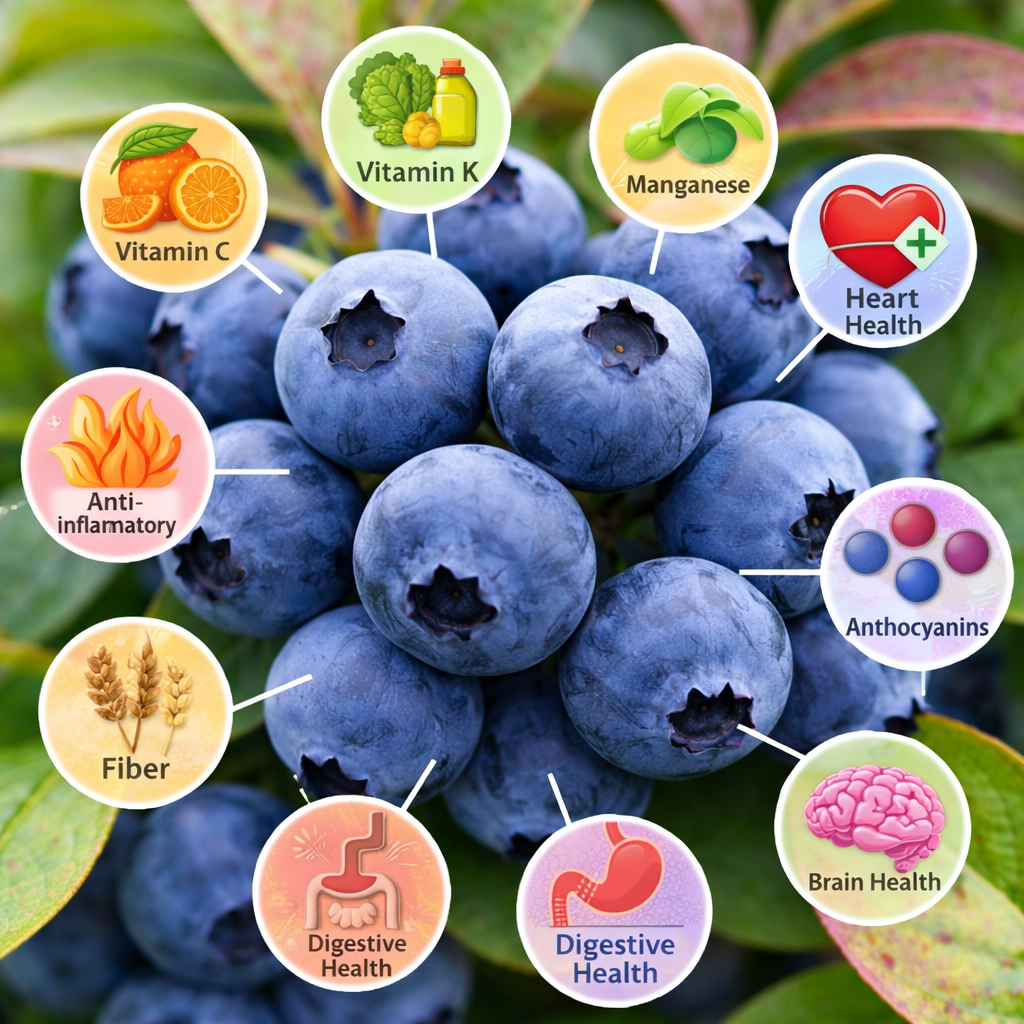
- Vitamin C
- Vitamin K
- Manganese
- Fiber
- Anthocyanins (powerful antioxidants)
Potential benefits:
- Supports heart health
- Anti-inflammatory
- Supports brain and memory function
- Supports digestive health
Because Jelly Bean blueberries are eaten fresh, frozen, or processed, they retain most of the nutritional benefits typical of blueberries.
Jelly Bean Blueberry Planting
Best location
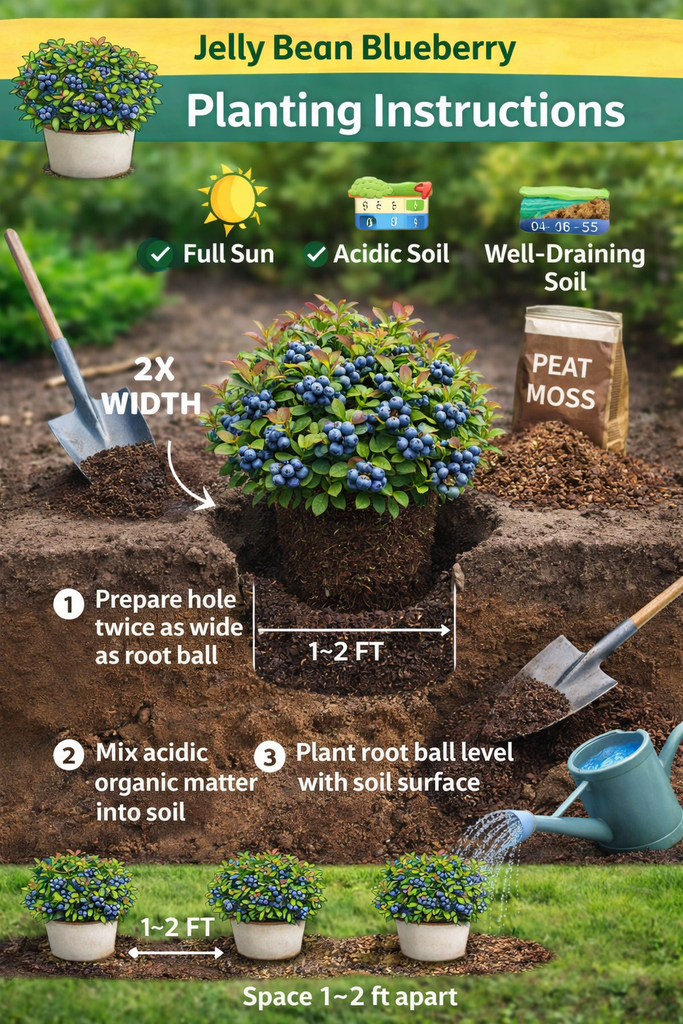
- Full sun (minimum 6–8 hours daily)
- Acidic soil: pH 4.5–5.5
- Well-draining soil
- Protected from strong wind if possible
Blueberries require acidic soil to absorb nutrients effectively.
When to plant
- Early spring (best)
- Fall in mild climates
Spacing
- 1–2 ft apart if planting multiple shrubs.
Planting steps
- Dig a hole twice as wide as the root ball.
- Mix soil with acidic organic matter (peat moss, pine bark, compost).
- Set plant with the root ball level with the soil surface.
- Backfill and water thoroughly.
- Apply 2–3 inches of mulch (pine bark, pine needles, wood chips).
Container planting:
- Use acidic potting mix for azaleas/rhododendrons.
- Container size: at least 12–16 inches wide.
Jelly Bean Blueberry Caretaking
Water
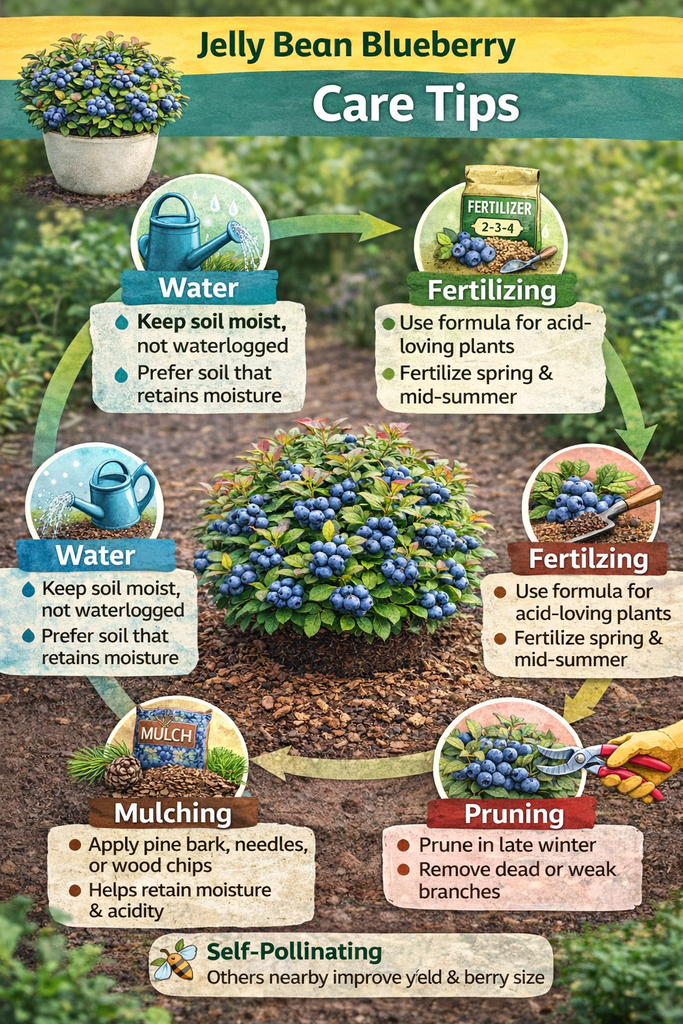
- Keep soil consistently moist but not waterlogged.
- Blueberries have shallow roots, so drought stress quickly reduces yields.
Fertilizer
Apply fertilizer for acid-loving plants:
- Early spring (new growth)
- Mid-summer (light feeding)
Avoid high-nitrogen fertilizers late in the season.
Mulching
Mulch helps:
- Maintain soil acidity
- Retain moisture
- Protect shallow roots
Recommended mulch:
- Pine needles
- Bark mulch
- Wood chips
Pruning
Minimal pruning required due to dwarf size.
Prune:
- Late winter / early spring
- Remove dead, damaged, or weak branches
- Shape lightly to maintain mound form.
Pollination
- Self-pollinating
- Planting multiple blueberry varieties increases yield and berry size.
Pest protection
Common threats:
- Birds
- Aphids
- Scale insects
Bird netting is often needed during fruiting.
Jelly Bean Blueberry Harvesting
Fruit timing
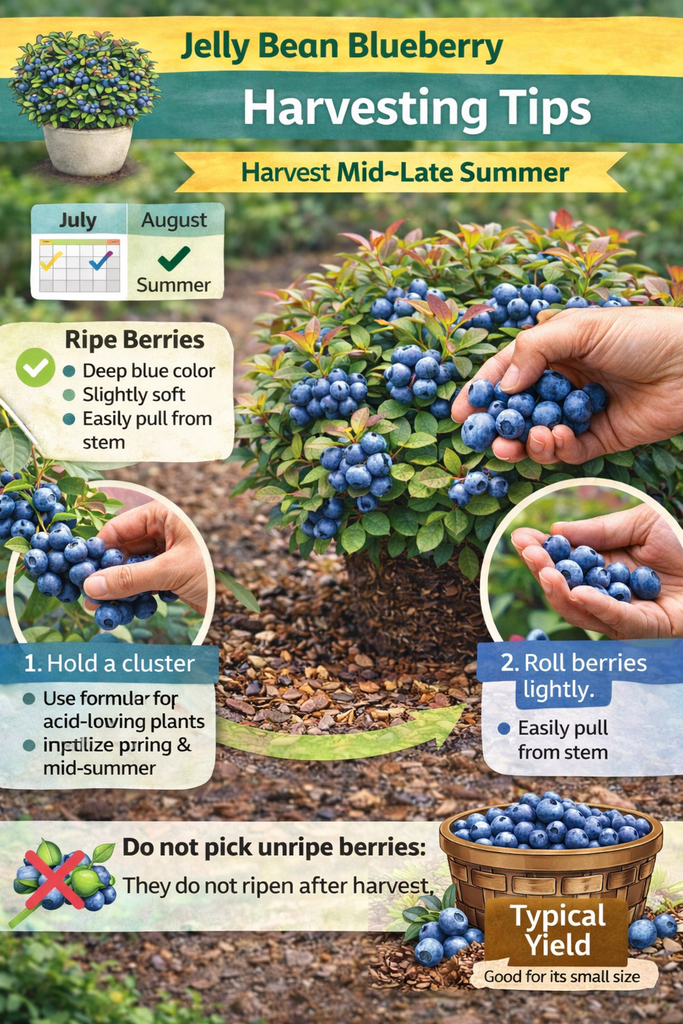
- Mid-summer
- Typically July–early August depending on climate.
Signs berries are ready
Ripe berries:
- Deep blue color
- Slightly soft
- Easily detach from the stem
Harvest method
- Hold a cluster gently.
- Roll berries lightly with fingers.
- Fully ripe berries fall into your hand easily.
Avoid picking unripe berries because they do not continue ripening after harvest.
Typical yield:
- Good yields relative to its small size.
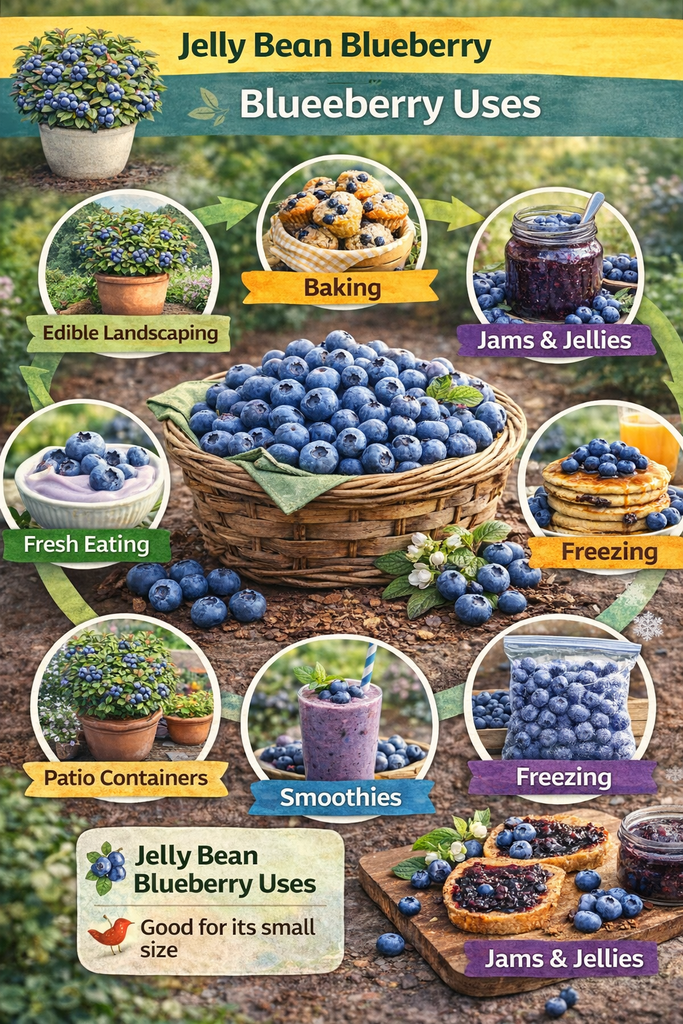
Jelly Bean Blueberry Uses & Storage
Fresh uses
- Fresh eating
- Fruit salads
- Smoothies
- Yogurt toppings
- Baking
Preserving
Jelly Bean blueberries are ideal for:
- Jam
- Jelly
- Pie filling
- Syrups
- Dehydrated berries
Storage
Fresh storage:
- Refrigerate immediately
- Do not wash until ready to eat
Shelf life:
- Refrigerator: 1–2 weeks
Freezing:
- Rinse and dry berries.
- Spread on tray and freeze.
- Transfer to freezer bags.
Frozen blueberries last 8–12 months.
Jelly Bean Blueberry Monthly Schedule
| January | Dormant Plan planting locations Order plants |
| February | Prepare soil Adjust soil pH if necessary |
| March | Plant new bushes Apply mulch Light fertilization |
| April | Plants leaf out White flowers appear Ensure pollinator access |
| May | Fruit begins forming Maintain steady watering |
| June | Berries enlarge Protect from birds |
| July | Main harvest period Pick berries regularly |
| August | Late harvest Light summer fertilization if needed |
| September | Plants slow growth Continue watering during dry periods |
| October | Foliage turns red Add mulch for winter protection |
| November | Plants go dormant Protect container plants from severe cold |
| December | Dormant Prune planning for late winter |
Where to Buy

Stark Bros.
Great quality plants with a 1-year guarantee. Granted, you will pay more for a smaller plant. I typically have a 95%+ success rate with all my Stark Bros plants.