
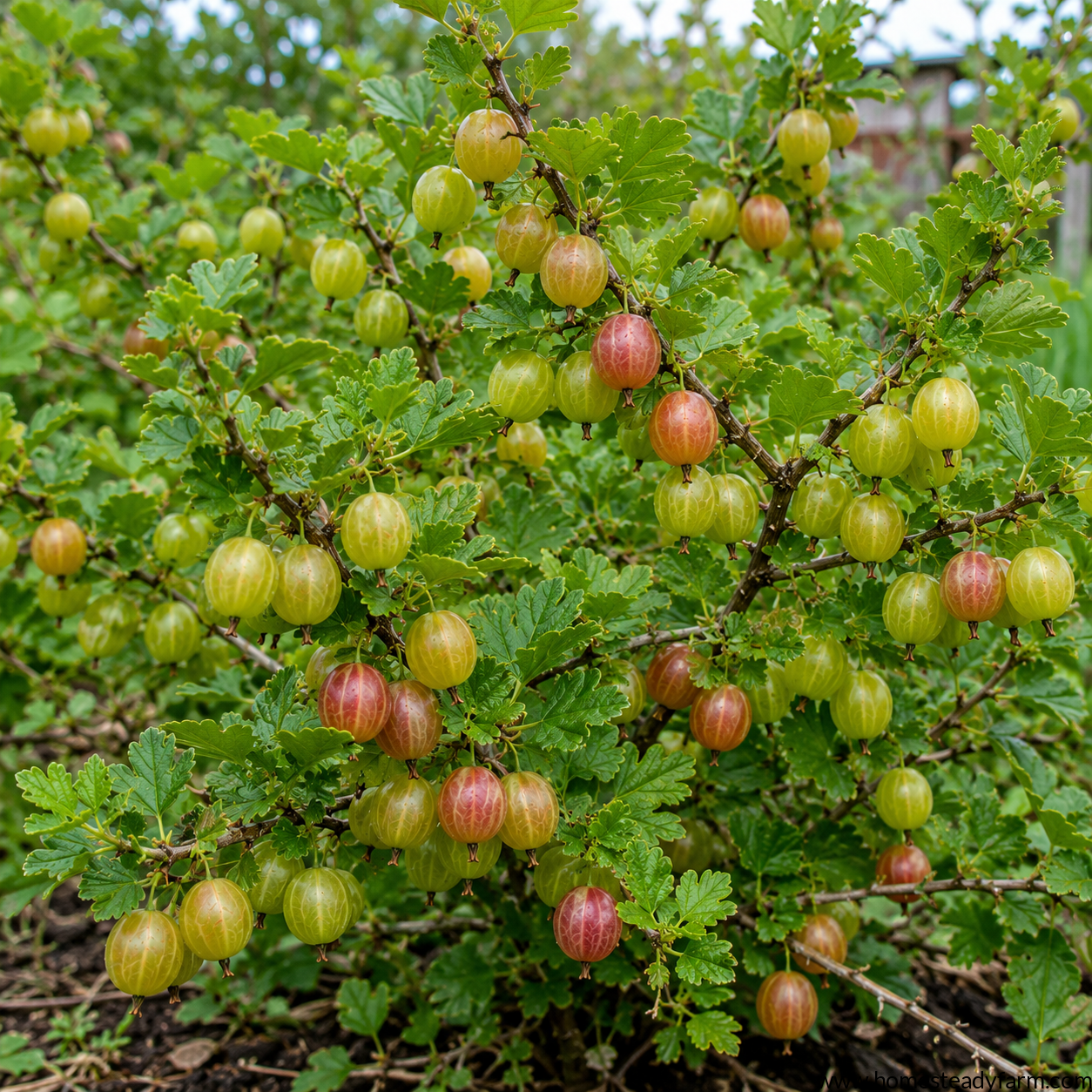
Gooseberries are hardy, cold-tolerant berry shrubs that produce tart to sweet fruits rich in vitamins, antioxidants, and fiber.
Once a staple fruit in home gardens, gooseberries are gaining popularity among homesteaders, permaculture growers, and small-scale farmers because of their productivity, resilience, and ability to thrive in cooler climates.
Their fruits can be eaten fresh, cooked into jams and pies, dried, frozen, or processed into juices and wines. Gooseberry plants are long-lived and can provide reliable harvests for decades with proper care.
I am growing a variety of Gooseberries on my farm to test them out. I’ve never grown them before, so I’m trialing several varieties (listed at the end of this page).
In addition, I have found wild Gooseberries growing on my ranch and am now monitoring them and will be taste-testing those when ready!
| Mature Size | 3–6 ft tall, 3–6 ft wide |
| Plant Zones | 3–8 |
| Soil Type | Well-drained loam, sandy loam, fertile garden soil |
| Soil pH | 5.5–7.0 |
| Light | Full sun to partial shade |
| Water | Moderate; consistent moisture preferred |
| Chill Hours | 800–1,500+ hours |
| Bearing Age | 2–3 years |
| Bloom Time | Early to mid-spring |
| Pollination | Mostly self-fertile; cross-pollination improves yields |
| Harvest Time | June–August |
| Average Yield | 4–12 lbs per bush |
| Lifespan | 20–30+ years |
| Uses | Fresh eating, jams, jellies, pies, sauces, wine, drying, freezing |
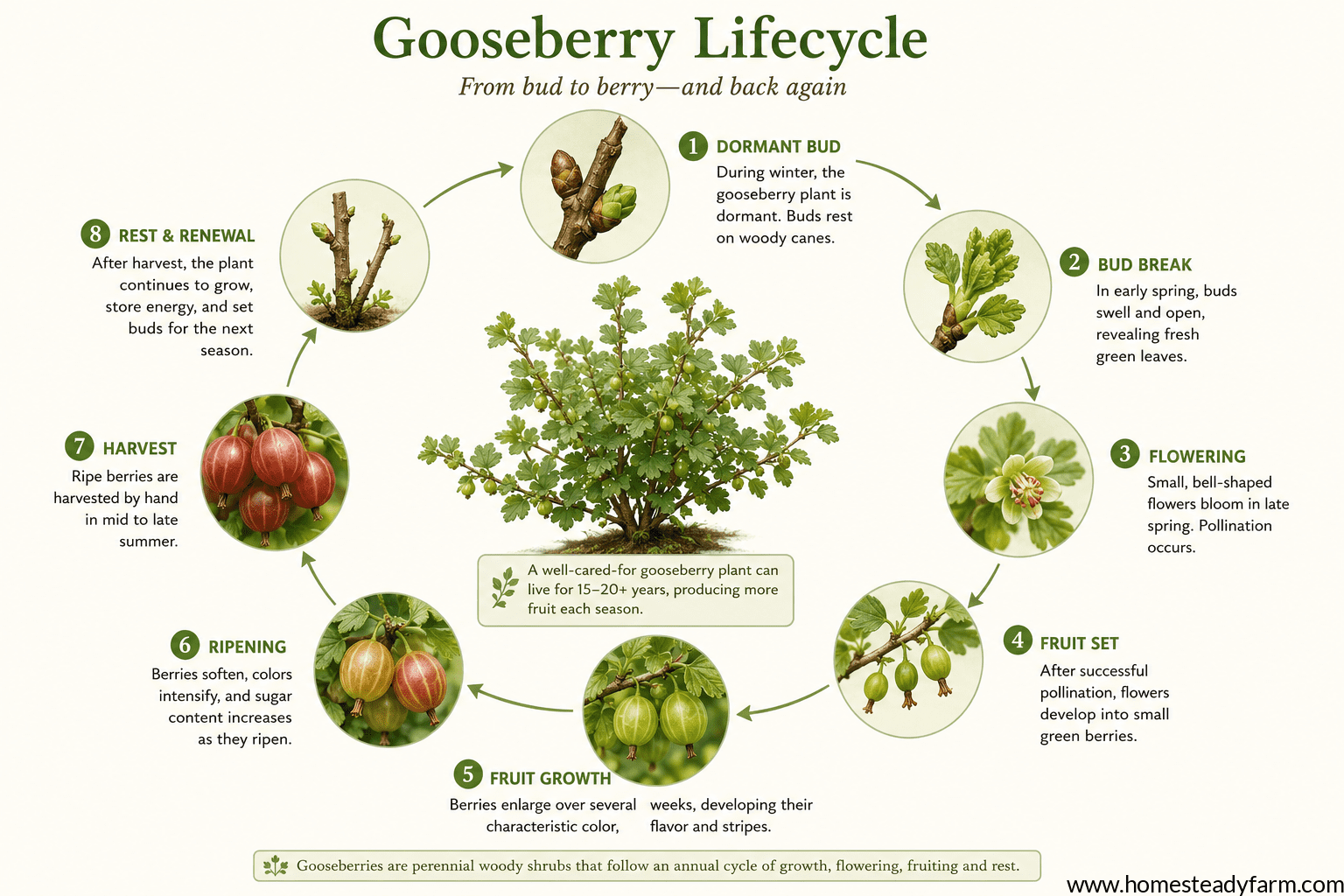
Lifecycle
Gooseberries are deciduous perennial shrubs that enter dormancy each winter and resume growth each spring.
Year 1
- Establish root system
- Limited fruit production
Years 2–3
- First meaningful harvests
- Canes become productive
Years 4–10
- Peak production years
- Consistent annual harvests
Years 10–30+
- Mature shrub remains productive with pruning
- Older canes gradually replaced by new growth
Plants lose their leaves in fall and require winter chilling to break dormancy and produce flowers.
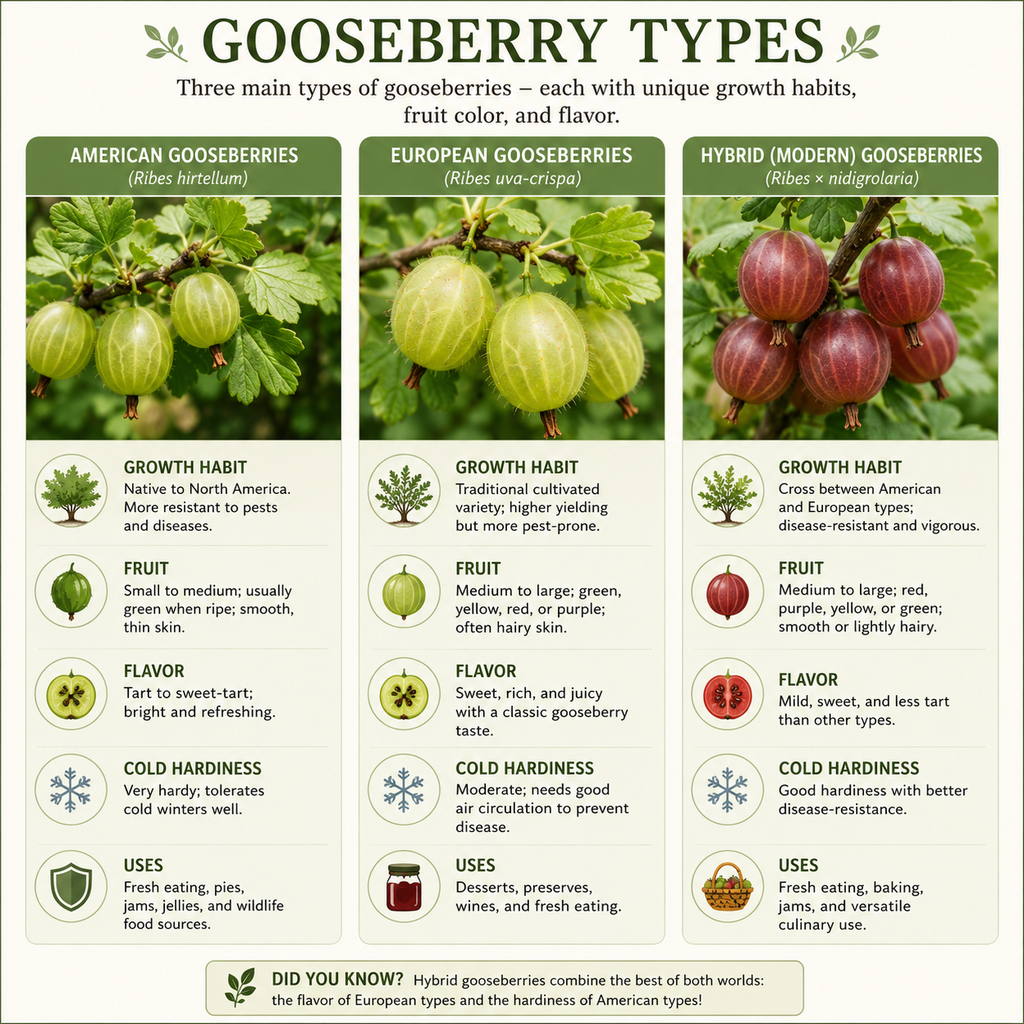
Plant Types
European Gooseberries (Ribes uva-crispa)
Characteristics:
- Larger fruit
- Sweeter flavor
- Excellent dessert quality
- More susceptible to diseases in humid climates
Popular in Europe and specialty fruit production.
American Gooseberries (Ribes hirtellum)
Characteristics:
- Smaller fruit
- Extremely cold hardy
- Better disease resistance
- Reliable production
Well suited to North American gardens and homesteads.
Hybrid Gooseberries
Characteristics:
- Combine large fruit size with disease resistance
- Improved vigor and productivity
- Common among modern cultivars
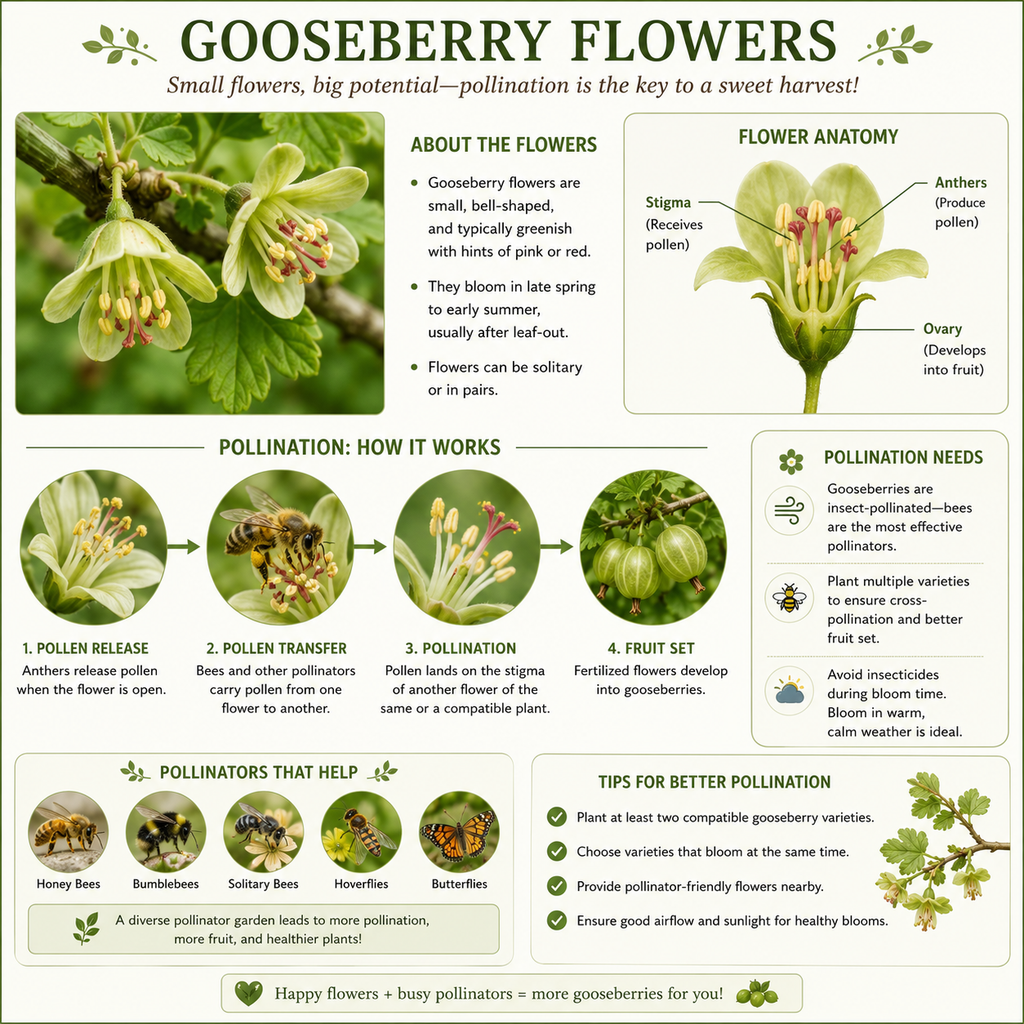
Flowers & Pollination
Gooseberries bloom in early spring before full leaf-out.
Flower characteristics:
- Small bell-shaped flowers
- Greenish-white to pinkish coloration
- Nectar source for bees and beneficial insects
Pollination:
- Most varieties are self-fertile
- A second variety often increases fruit size and yield
- Pollinated primarily by native bees, honeybees, and other insects
Late frosts can occasionally damage flowers, though gooseberries are generally frost tolerant.
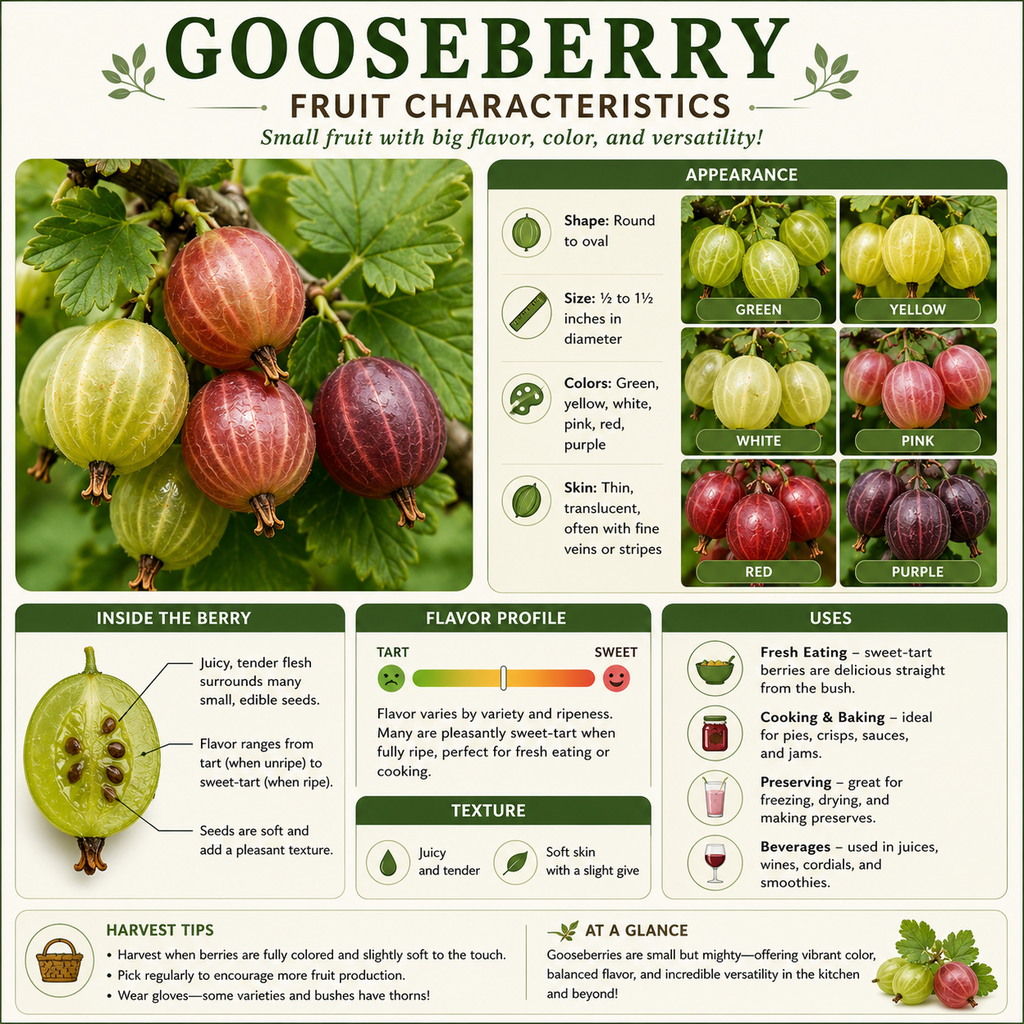
Fruit Characteristics
Gooseberry fruits vary considerably depending on variety.
Fruit traits:
- Round to oval berries
- ½–1½ inches in diameter
- Colors include green, yellow, white, pink, red, and purple
Flavor range:
- Tart when immature
- Sweet-tart when ripe
- Some dessert varieties become quite sweet
Texture:
- Thin translucent skin
- Soft juicy flesh
- Numerous edible seeds
Fruit can be harvested:
- Early for preserves and baking
- Fully ripe for fresh eating
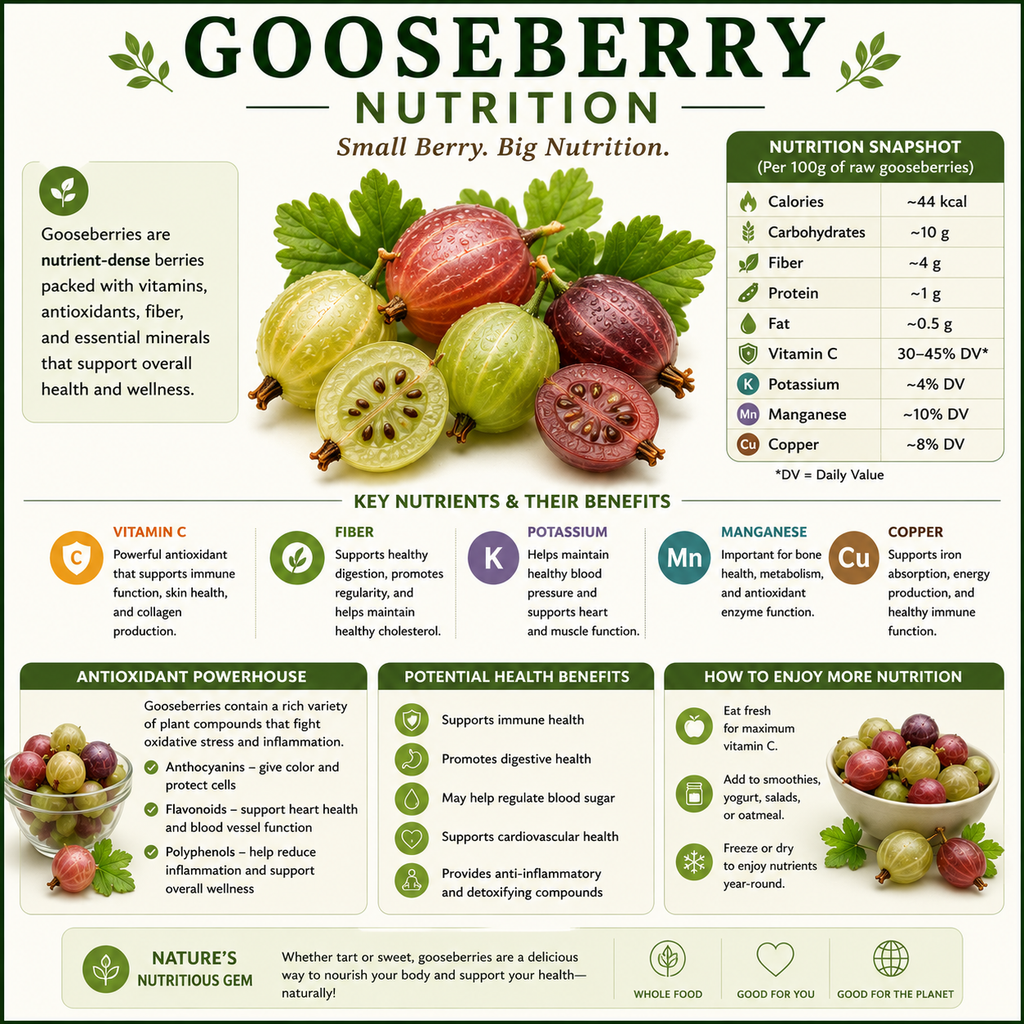
Nutrition
Gooseberries are highly nutritious and considered a functional food.
Rich In
- Vitamin C
- Fiber
- Potassium
- Manganese
- Copper
Antioxidants
- Anthocyanins
- Flavonoids
- Polyphenols
Potential Benefits
- Supports immune health
- Promotes digestive health
- May help regulate blood sugar
- Supports cardiovascular health
- Provides anti-inflammatory compounds
Typical serving (100g):
- Calories: ~44
- Carbohydrates: ~10g
- Fiber: ~4g
- Vitamin C: Approximately 30–45% DV
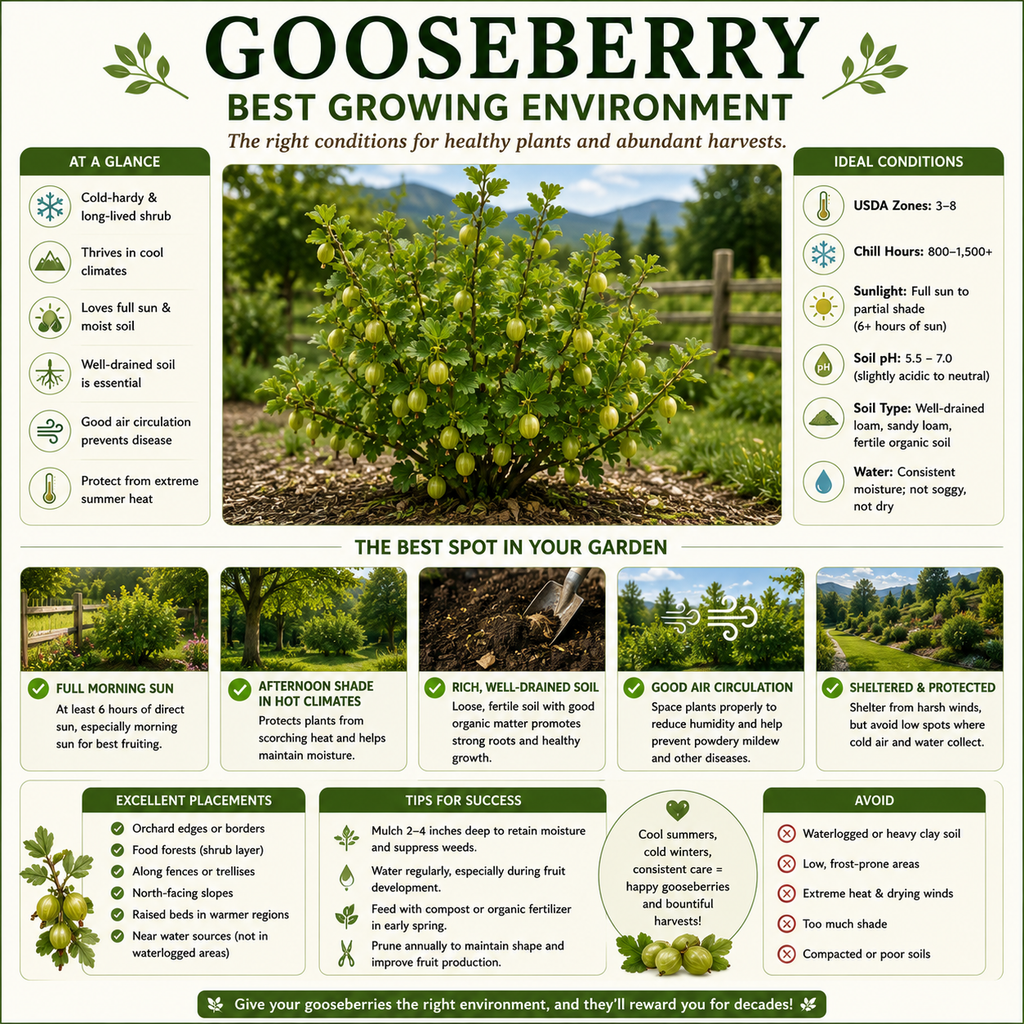
Best Growing Environment
Gooseberries perform best in climates with cold winters and mild summers.
Ideal conditions:
- Full morning sun
- Afternoon shade in hot climates
- Consistently moist soil
- Good air circulation
- Protection from extreme summer heat
Excellent locations:
- Food forests
- Orchard edges
- Woodland gardens
- North-facing slopes
- High-elevation homesteads
For hot southwestern climates, afternoon shade significantly improves plant health and fruit quality.
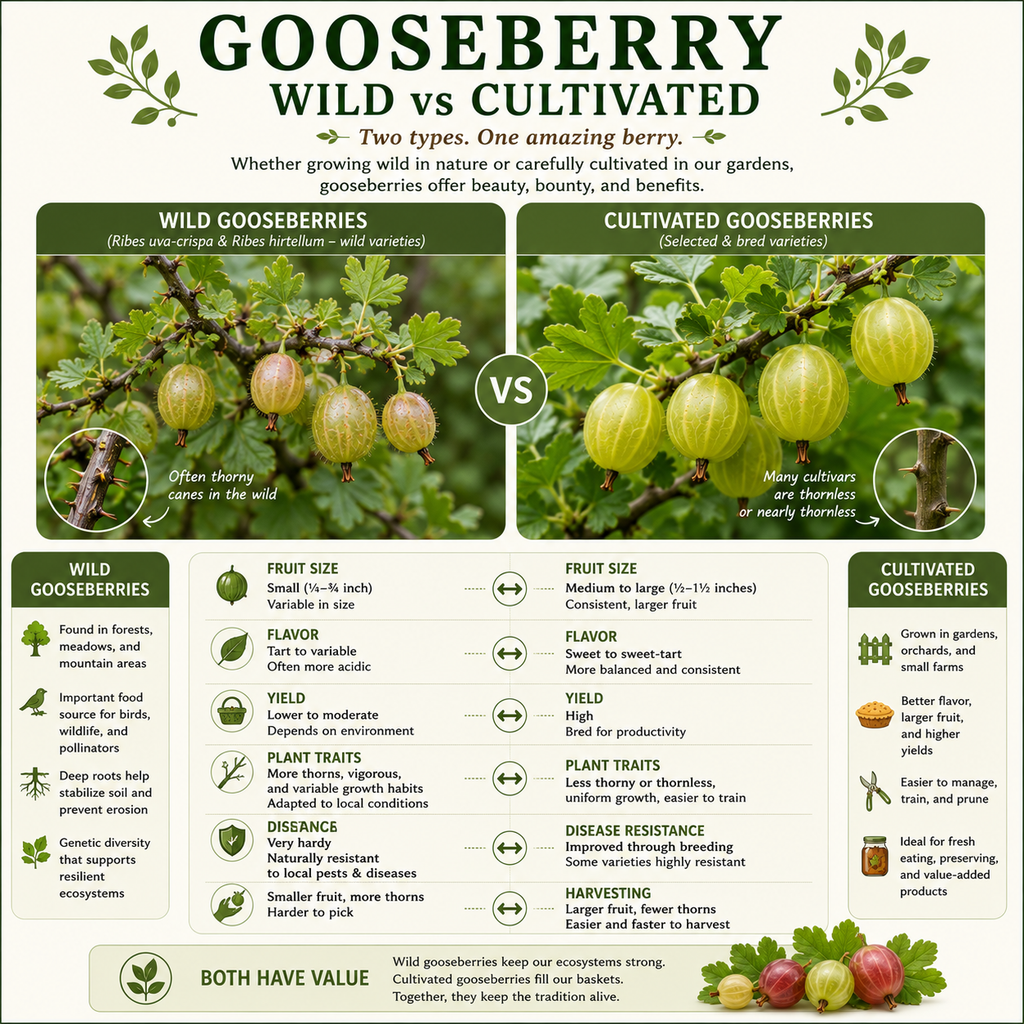
Wild vs Cultivated
I recently discovered that I have wild gooseberries growing on my property, which is a really cool find! They started producing fruit in June. I will be keeping an eye on them and hope to be able to taste the fruit and see if it’s any good.
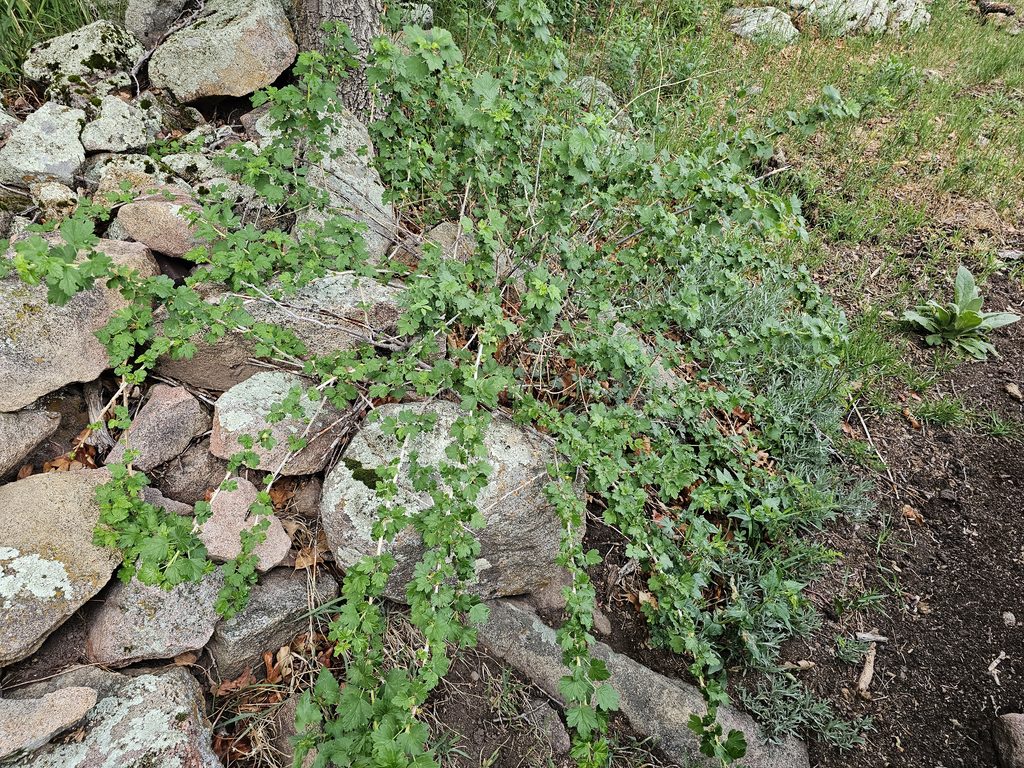
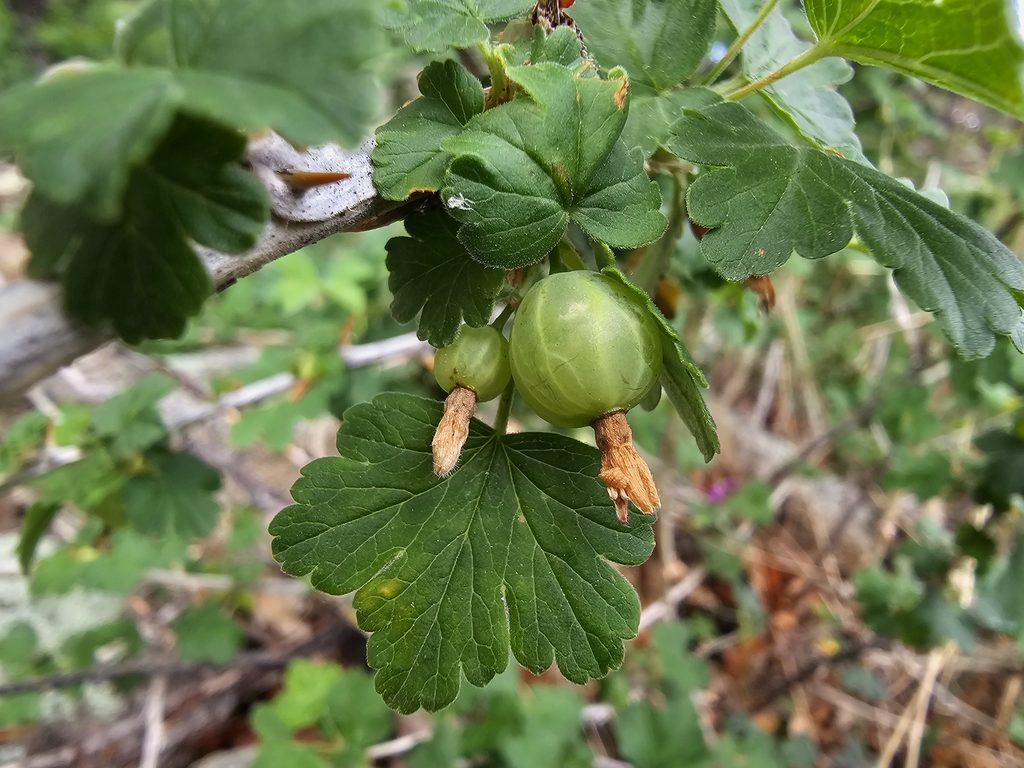
Wild Gooseberries
Characteristics:
- Smaller fruit
- More thorns
- Variable flavor
- Excellent wildlife value
- Naturally adapted to local environments
Often found:
- Forest edges
- Meadows
- Riparian areas
- Mountain valleys
Cultivated Gooseberries
Characteristics:
- Larger fruit
- Improved sweetness
- Higher yields
- Easier harvesting
- Better disease resistance
Selected for commercial and home production.
Ecological Value
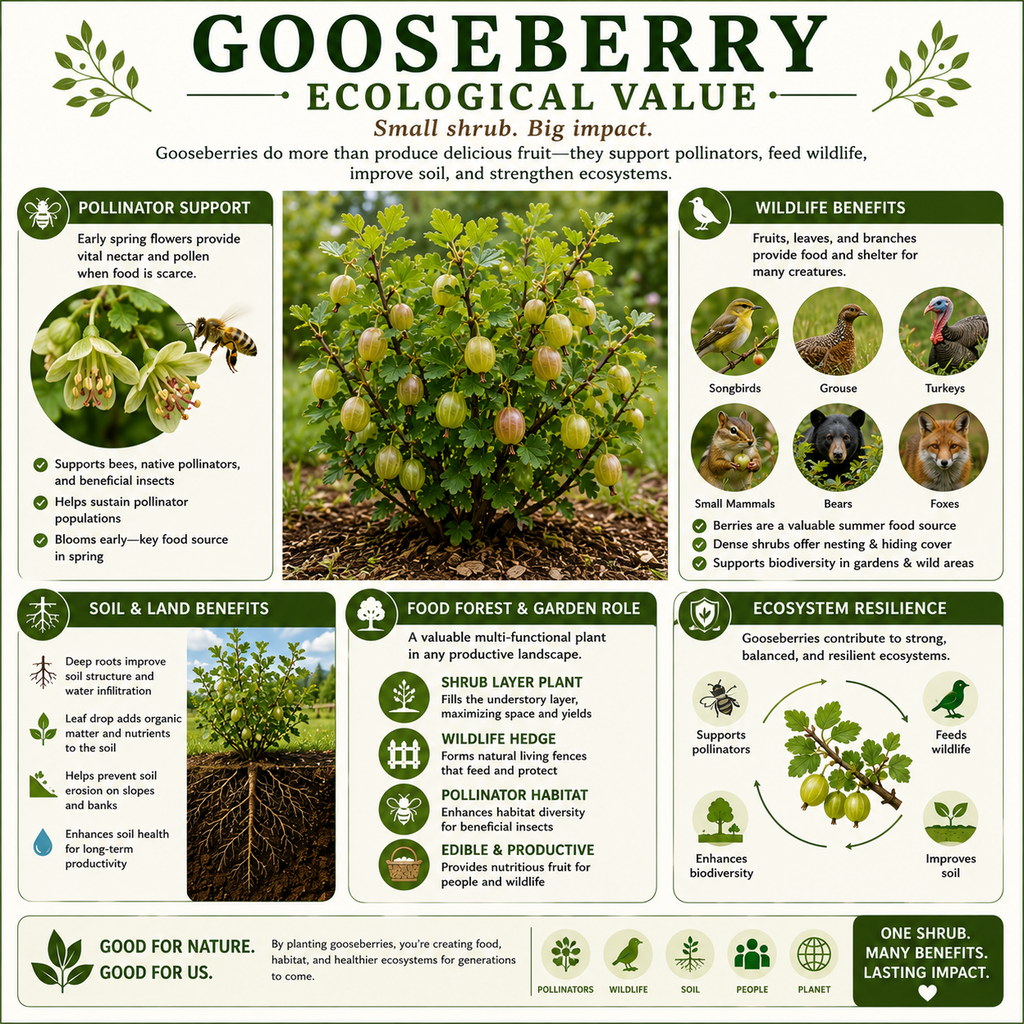
Gooseberries contribute significantly to ecosystem health.
Pollinator Support
Flowers provide:
- Early nectar
- Early pollen
- Habitat diversity
Wildlife Benefits
Fruit consumed by:
- Songbirds
- Grouse
- Turkeys
- Small mammals
- Bears in some regions
Soil Benefits
- Deep roots improve soil structure
- Leaf litter adds organic matter
- Helps stabilize slopes and banks
Food Forest Function
Useful as:
- Shrub layer species
- Wildlife hedge plant
- Pollinator support species
- Fruit-producing understory crop
Monthly Schedule
| January | Inspect dormant plants Plan new plantings Order bare-root plants Review pruning needs |
| February | Finish dormant pruning Remove damaged wood Apply compost around bushes |
| March | Plant bare-root shrubs Mulch around plants Begin irrigation setup |
| April | Monitor flowering Encourage pollinator activity Watch for late frost damage |
| May | Maintain consistent moisture Weed around plants Monitor for pests and diseases |
| June | Continue watering Net bushes if birds become a problem Begin harvesting early varieties |
| July | Peak harvest season Pick berries every few days Freeze or preserve excess fruit |
| August | Harvest late varieties Remove damaged fruit Evaluate plant productivity |
| September | Apply compost Remove weeds Reduce irrigation as weather cools |
| October | Clean fallen fruit Refresh mulch Inspect for disease issues |
| November | Remove dead branches Protect young plants if needed Prepare for winter dormancy |
| December | Minimal maintenance Monitor for animal damage Plan next year’s pruning and expansion |
Varieties
These are the varieties that I am growing on my ranch at 8,500ft elevation and Plant Zone 6a. Click on the name to view detailed information for that specific variety and any growing notes from my personal experiences with that variety.
- Black (native)
- Black Velvet
- Hinnomaki
- Hinnomaki Yellow
- Pixwell
- Wild